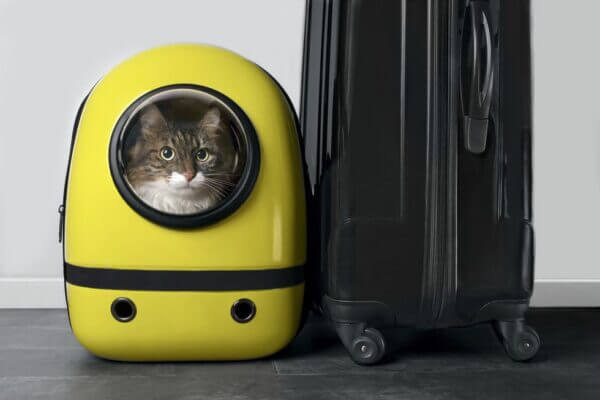
If you walk with your cat outdoors, a collar with an ID tag will be enough. However, this preparation won’t be enough if your travels take you further. Finding out how to travel with a cat in a car, by plane, or by other means of transportation will help you provide the utmost comfort and care for your lovely kitten, ensuring both can enjoy the journey.
How to Travel with a Cat on a Plane: Best Practices
Don’t hesitate to write notes and considerations you come up with. It will help you decide on the methods that will work in your particular case:
- Purchase the right cat carrier. It should be spacious enough for your cat and a cozy blanket to put in the carrier’s bottom.
- If traveling by car, test how the carrier fits your vehicle. It is essential to ensure buckling a seat belt is a feasible task to complete.
- Although strong tranquilizers aren’t recommended, consult with your vet to get any auxiliary medication to help your cat overcome their anxiety.
How to Travel with a Cat Internationally: Tips and Suggestions
You should always conduct thorough research about what guidelines and regulations this or that destination country has to let you travel with your pet safely and without difficulty. If you plan to completely move to another land, consulting with a professional pet relocation company may be a safer alternative.
For those who just want to know how to travel by airplane with a cat (or other means of transportation abroad), here are a few must-have considerations:
- Health checks and certificates — while several documentation-related details may differ from land to land, you will certainly need to visit your cat’s vet and ensure his or her preparedness for a flight — it is a rather stressful adventure, especially for first-time flights.
- Pet-friendly airlines — seeking cheap flights, don’t forget to check whether you will be allowed to take a cat. There are numerous companies with no-pet policies. Please note your kitty won’t necessarily spend time with you in the main salon of the plane — all the pets can spend time in a cargo hold, which is specifically pressurized, temperature-controlled, and monitored for canines’ needs. Plan your flight in advance to choose the right service — cargo, accompanied baggage, and in-cabin solutions are charged differently.
- Vaccinations and microchips — one of the most crucial procedures is to make sure your pet has all the required vaccines done, including commonly mandatory options like FVRCP and rabies vaccines. Even if you don’t plan your next journey yet, they will be efficient in maintaining your pet’s health overall — an additional shield for their immune system against diseases like panleukopenia and calicivirus. ISO-compliant microchipping is another essential procedure. They are harmless, small, and non-toxic, containing data about your ownership rights over your lovely cat.
- Say “no” to tranquilizers — even if you want to sedate your four-legged friend to help him or her stay calm during the journey, it isn’t recommended by experts. The thing is that this action might reduce their natural ability to control body functions at high altitudes, which may cause more harm than good.
Wrapping It Up
Remember that exploring how to travel with a cat requires a personalized approach. See what will work for your pet, depending on his or her temperament, state of health, and age. For pets who have never traveled before, your special care and support will be of extreme importance.